
John Robert Godley is known as the Founder of Canterbury
even though he lived here for only two and a half years. Without his leadership the Canterbury Association back in England would have controlled the settlement more. The way in which Godley led the settlement helped establish the strong farming base and prosperity Canterbury has always relied on.
Early life and career
John Robert Godley was born on 29 May 1814, in Dublin, Ireland, and died on 17 November 1861, in London, England. He was the eldest son of John Godley, an Irish landlord, and his wife Katharine Daly.
John attended school at Harrow, and later Christ College, Oxford. He suffered from poor health, which prevented him from making a career as a lawyer. Godley travelled in Ireland and North America and developed ideas about how colonies should be established and governed.
The New Zealand Company
The New Zealand Association (later the New Zealand Company) was formed in England in 1837 to carry out Edward Gibbon Wakefield’s dream of an organised English colonisation or settlement of New Zealand. It was responsible for the European settlement of Wellington, New Plymouth and Nelson, and supported the church settlements in Canterbury and Otago. Wakefield persuaded Godley to lead the new colony, and he was able to use his influence with his friends to raise money for the scheme.
Canterbury Association
The Canterbury Association was formed in 1848 and was supported by a number of members of parliament and English peers, including the Archbishop of Canterbury. The capital city of the new colony was to be called Christ Church, after the Oxford College John Robert Godley attended.
Captain Joseph Thomas was sent to Canterbury to choose a site and prepare for the arrival of the new settlers. The Canterbury Association bought the land from the New Zealand Company. The agricultural settlement planned was to be made up of selected Anglican families, with the land sold to the settlers to raise money for the building of schools, roads, and churches.
The rural sections were sold in lots of no less than 50 acres. The land in the city (1,000 acres) was divided into quarter acre sections, and balloted out to the new settlers. The Association hoped to establish a colony of 15,000 people, with a bishop (and a cathedral), 21 clergy, and 20 schoolmasters. Twelve shiploads of settlers were planned, with the first four leaving England in September 1850.
Arrival in New Zealand
Godley married Charlotte Griffith Wynne in September 1846. The family arrived in Port Cooper (Lyttelton) in April 1850. He was met by Captain Thomas and shown the plans for three towns, and housing for the new settlers at Lyttelton.
The fleet of the first four ships reached Lyttelton in December 1850 and was met by Godley. He was the leader of the settlement for the next two years, and in this time changed the Canterbury Association’s conditions for the pastoral leases (land in the surrounding countryside leased for farming), so that the new settlement was able to make a good start to establishing a strong farming base.
Godley believed that the purpose of the Association was to found Canterbury, not govern it, and that the people making a life in the new settlement should decide how it was run, not people in England.
Godley returned to England in December 1852, where he wrote for some of the newspapers on the subject of colonial reform. He later worked for the War Office and continued to argue for self-government for the British colonies.
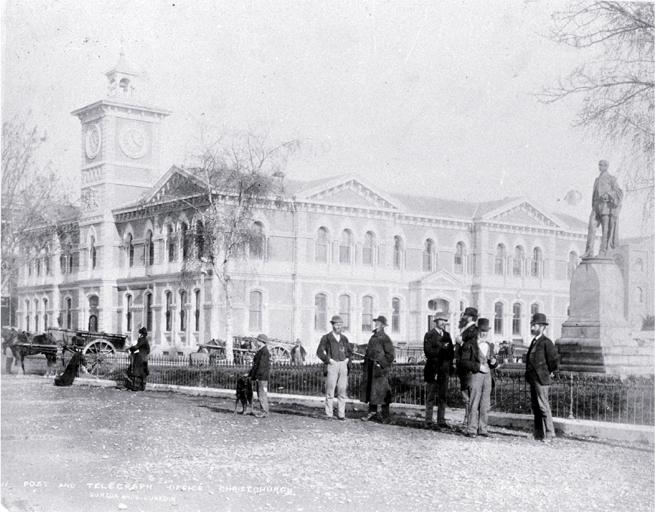
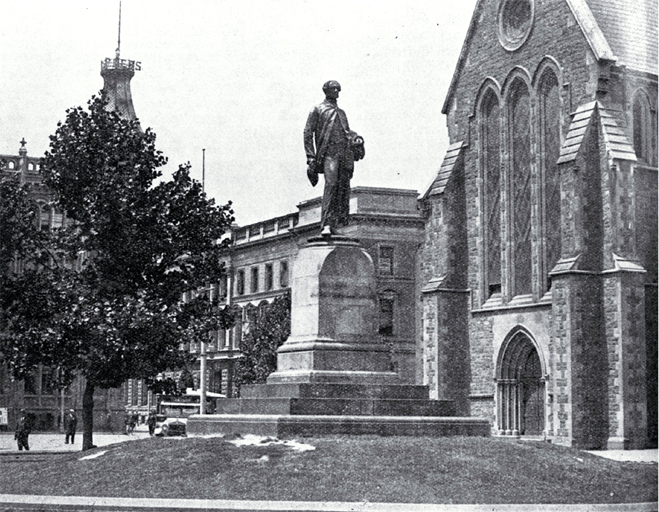
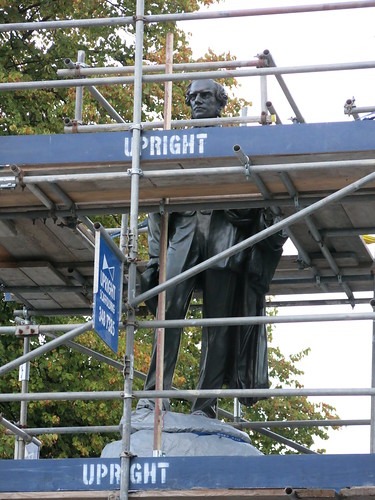
Godley died on 17 November 1861 in London. In 1867 the citizens of Christchurch erected a statue of him in Cathedral Square.
Sources
- Gerald Hensley. Godley, John Robert from the Dictionary of New Zealand Biography. Te Ara - the Encyclopedia of New Zealand, updated 30-Oct-2012
- Search Digital NZ for John Robert Godley
- Bateman New Zealand encyclopedia, 5th edition: David Bateman, 2000
- New Zealand’s heritage, Vol. 2. Wellington, [1971-73]
- Geoffrey W. Rice, Christchurch changing: an illustrated history. Christchurch, 2000
- John Robert Godley statue article Canterbury Stories
