
Tī Kōuka - a symbol for our city
Tēnā koutou katoa
He tautokongia tēnei te mahi tino whakahirahira o Ngā Kete Wānanga-o-Ōtautahi pēnei
Kia maia kia manawanui
Terry Ryan M.B.E., J.P.
Whakapapa: Te Rūnanga o Ngāi Tahu
Imagine a distant past where the mist and fog shrouded flatlands, spreading out towards the sea, rich with bird and water life. There were few landmarks emerging from the mists of what was then essentially swampland. If weather obscured the hills there was no way of knowing where you were. That is if it were not for the tī kōuka (cabbage trees) that were carefully planted in significant places to mark out routes across the land like green spiky beacons.
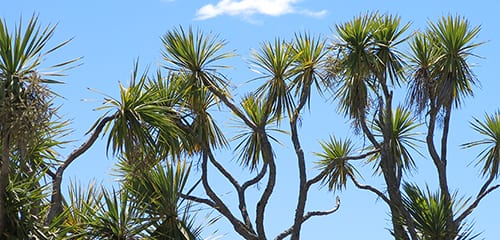
Tī kōuka were prized trees for the Māori of Te Wai Pounamu. Aside from their use as navigational markers, they provided the favoured fibre for fishing due to superior strength and the kōuru or new shoots were an important source of protein in a land where kūmara was difficult if not impossible to grow.
The site of the ancient Waitaha pā, Puari, on the banks of Ōtākaro is home to a very old stand of trees that cluster together in an enduring circle. These trees are the mokopuna of a great tī kōuka who grew there before them. Today they mark the circumference of the ancient tree from which they sprung. They are a living memorial to their ancestor.
The growth pattern of the tī kōuka mirrors the concept of whakapapa and the connectedness of tribal and local history. Our ancestors are closer to us than we may think. The land around us is imbued with their histories. While we cannot go back, we can learn from those who were here before us.
Our present is formed out of our past. In turn, our future is born of our present.
A greater understanding of the important places of our past will nurture us and our futures.
Background
In the depths of winter in the low lying areas of Christchurch it is not hard to recall that our city was originally a swamp.
That was its attraction to Māori, for the sprawl of wetlands that linked Kaiapoi to Christchurch and extended out to Te Waihora (Lake Ellesmere) provided abundant food sources and defensive positions.
Christchurch and the wider Canterbury region has a vibrant past of which few people are aware. There are only minimal visual reminders of any history prior to colonial settlement. However as this website will enable you to discover, we have a rich and intriguing past that extends back many hundreds of years before 1850.
Increasing awareness and knowledge of this past is the primary aim of this website. We hope that it will enrich your understanding of your surroundings and enhance your current perceptions of the city in which we live.
There are many sites of significance found throughout Ōtautahi (Christchurch City), Horomaka (Banks Peninsula) and the wider Canterbury region. This website will provide some insights into a selection of these places.
Respect Our Cultural Heritage
Many places in Ōtautahi have a spiritual and historical significance.
Treat these places with consideration and respect.
Toitū te whenua — Leave the land undisturbed.
