



Wonderland
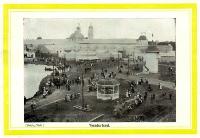
- Many of the attractions at the Exhibition were of an educational nature but "Wonderland" was the opposite, treating visitors to side-shows, rides, and other amusements.
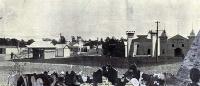
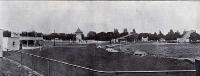
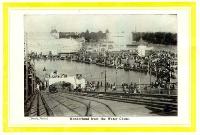
- Occupying 10 acres (over 4 hectares) of the Hagley Park Exhibition site, Wonderland was the 1906 equivalent of a modern day theme park.
- Regarded by some as being too entertainment focused and lacking in educational value, it was nonetheless an immensely popular part of the Exhibition.
Amusements
Wonderland was set up by a private syndicate at a cost of £20,000. The grounds were laid out by John Edward (Jack) Muir a gardener who had trained at the Earl of Hamilton’s Lanarkshire estate. Muir moved to Christchurch in 1904 from Australia and later established a garden seed and florist’s shop in Colombo Street as well as a couple of suburban nurseries.
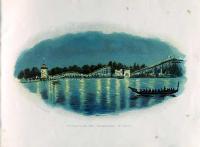
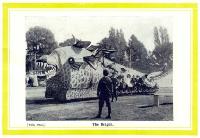
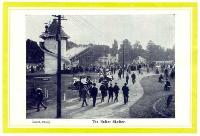
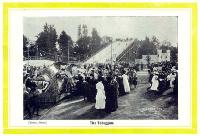
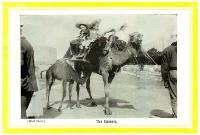
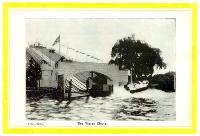
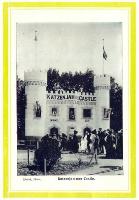
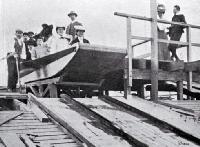
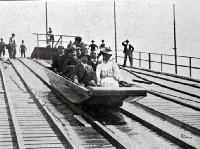
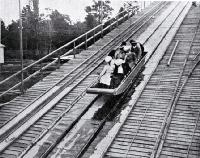
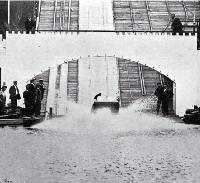
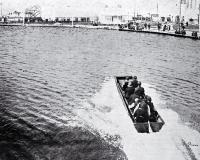
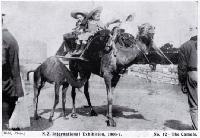
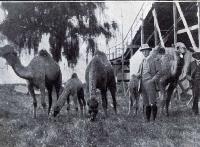
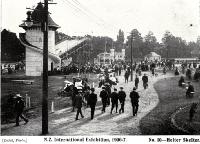
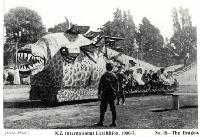
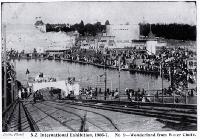
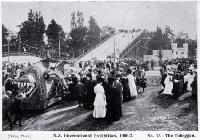
Wonderland included the following attractions: the water-chute, described as the "most riotous" 1, which utilised the waters of Victoria Lake; the helter-skelter, a spiral slide from the top of a tower; a Chinese dragon train; fancy diving; toboggans on a wooden floor; the mysterious Katzenhammer Castle, from the windows of which hung "figures suggestive of the darkest deeds"2; and camels, very "novel to colonials"3, which ambled round the grounds "under the weight of half-a-dozen happy youngsters". There were also performing dogs and monkeys, and a tea-rooms. Side-shows at the Exhibition included a huge merry-go-round, an aerial tramway, a Jungle shooting saloon and Box-ball hall, and the 375 feet (114 metres) long Battle of Gettysburg Cyclorama.
The Pike
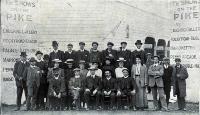
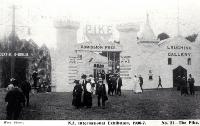
The Pike was "the home of mirth"4 and was operated by Frederick Shipman. It provided "the most remarkable collection of penny-in-the-slot machines that [had] ever visited Christchurch"5, with musical, picture postcard, fortune-telling and other rewards, including an Exhibition medal with your name on it. The House of Trouble was a maze, the Laughing Gallery offered the "weirdest figures"6, and Rocky Road to Dublin another mystery tour. More homely entertainment came from Professor Renno and his palace of illusions and from a small marionette theatre. A candy floss machine proved an enormous attraction. The side-shows were open from 2:00-5:30pm and again in the evening from 7:00-10:30pm.
The Water Chute
"Wonderland", in the words of the Canterbury Times, was "for children and grown-up children, and even for very little children"7. Certainly it entertained thousands of visitors, including the Governor, Lord Plunket. The New Zealand free lance reported on 24 November 1906 that the funniest sight of the week had been His Excellency tackling the water chute "with great verve" and a refreshing lack of dignity; on reaching the landing place, "the gubernatorial countenance was one vast substantial smile, for, be he Plunket or pauper, there is no variation of the delight caused by that wonderful rush through space, that electric thrill when the boat smacks the water, and the exhilaration as she furrows bouncingly over the lake".
O’Neill’s Buckjumpers and Trick Ponies
One of the most popular entertainments which formed part of the Exhibition’s Wonderland was Ernie O’Neill’s horse riding and circus show. This show, according to the NZ Truth, was “without doubt the most amusing and most instructive of all the side shows”. Ernie O’Neill, along with his brothers, Vincent and Sid O’Neill, and rider Alick Reid, brought with them to Christchurch a team of 30 horses and ponies, including buckjumpers, trick ponies, and high jumpers, as well as several performing dogs. The show took place every night, the arena apparently “crowded to overflowing” as hundreds of visitors roared their approval. Among the happy crowds one evening were the Governor, Lord Plunket, along with the Minister in charge of the Exhibition, Sir Joseph Ward, and a large party, who pronounced themselves “delighted with the entertainment”.
The show consisted of exhibition riding, tricks performed by the two ponies, Silver Prince and Charmer, and by the dog team, with new tricks being introduced regularly. The most popular event was undoubtedly the buckjumping, The O’Neills and Reid guaranteed their ability to ride any horse, and a stream of owners brought allegedly “unrideable” mounts to the show, in an attempt to prove them wrong. No owner was able to produce a horse which could not be mastered. O’Neill also included a standing offer of 5 pounds to any rider who could stick with one of buckjumpers for at least a minute, using an English saddle, but during the first week, 58 men failed to last more than 6 seconds!
The O’Neill brothers were famous horsemen in New Zealand, who had competed regularly in show jumping and buckjumping contests around the country since the early 1900s. The success of the circus at the Exhibition encouraged O’Neill to take the show elsewhere in New Zealand, and from 1908 until early 1910, his circus, featuring both his own and others’ wild horses, performed in and proved popular in many provincial North and South Island venues. Financial difficulties apparently led to the circus being disbanded in 1910, and O’Neill became involved in horse racing as an owner and trainer. He was based in Hamilton and then South Auckland in the 1920s, and in 1925, joined his brother, Vincent, in Melbourne. In 1927, he took out a trainer’s and a trotting driver’s licence at the Williamstown course in Victoria.
Too much fun?
Some Christchurch citizens were less than impressed with the "non-educational" aspects of the Exhibition. The Press noted darkly that some visitors were making Wonderland the object of their trip to the Exhibition, rather than the exhibits themselves, while others expressed concern that "There is some danger lest the many forms of amusement … may put its educational purpose in the background".8 People would be encouraged to spend unwisely on pleasure, an economic as well as a religious sin: the spending of money on luxuries and non-necessities "when we are in debt is a direct breach of the 8th Commandment".9
Miss Gertrude Colborne-Veel, whose sister Mary was on the Home Industries Committee, expressed some relief when the Exhibition ended in a letter to another sister. "Lots of girls spent every evening at the Exhibition," she wrote, "and now feel home very dull. It must be bad for them".
During the course of the Exhibition, Wonderland attracted 350,000 fee-paying patrons and an estimated 150,000 non-paying visitors.

Related photos
Sources
- "The side shows", The Canterbury Times, 7 November 1906, page 22.
- Colborne-Veel, Mary, 1861-1923. Poems, prose and letters: also obituaries for her, ca. 1886-1923. Archive 474. Letter dated 24 April 1907.
- Colonist, 3 February 1908.
- "The Exhibition", New Brighton Monthly Magazine, December 1906, page 3.
- The New Zealand free lance, 24 November 1906, page 4.
- New Zealand truth, 3 November 1906, 24 November 1906, 19 March 1910, 1 December 1927.
- Poverty Bay Herald, 30 October 1908.
- The Press, 15 April 1907, page 8.
- Wanganui Herald, 28 December 1905.
Footnotes
- [1] "The side shows", The Canterbury Times, 7 November 1906, page 22
- [2] "The side shows", The Canterbury Times, 7 November 1906, page 22
- [3] "The side shows", The Canterbury Times, 7 November 1906, page 22
- [4] "The side shows", The Canterbury Times, 7 November 1906, page 22
- [5] "The side shows", The Canterbury Times, 7 November 1906, page 22
- [6] "The side shows", The Canterbury Times, 7 November 1906, page 22
- [7] "The side shows", The Canterbury Times, 7 November 1906, page 22
- [8] "The Exhibition", New Brighton Monthly Magazine, December 1906, page 3
- [9] "The Exhibition", New Brighton Monthly Magazine, December 1906, page 3
